
Buying a used car offers significant value when approached carefully. A thorough evaluation protects against hidden problems that can lead to expensive repairs or safety concerns. Following a structured process—from remote research to hands-on inspection and professional verification—helps identify reliable vehicles and avoid costly mistakes.
Begin with Vehicle History and Documentation
Start before visiting the car. Request the 17-character Vehicle Identification Number from the seller. Use it to obtain a comprehensive vehicle history report. These reports reveal reported accidents, title brands such as salvage, rebuilt, or flood, odometer readings over time, number of previous owners, and service history. Cross-check for open safety recalls. A clean report does not guarantee perfection, but red flags such as salvage titles, major accident claims, or inconsistent mileage readings often justify walking away.
Verify that the title is clean, in the seller’s name, and free of liens. Confirm the VIN matches across the dashboard, door jamb sticker, and title documents. Request any available service records and compare them with the odometer reading and the car’s overall condition.
Inspect the Exterior in Daylight
Examine the car outdoors in good light on a dry day. Walk around and look along the body lines for waves or ripples in the reflection that indicate repaired collision damage. Check panel gaps around doors, the hood, and the trunk; they should appear even and consistent. Mismatched paint shades between panels or overspray on rubber seals and trim suggest prior bodywork.
Inspect for rust, especially on rocker panels, wheel arches, door bottoms, and the undercarriage. Structural rust or rust-through represents a serious concern. Examine tires for even wear, adequate tread depth, and matching brands. Uneven wear can signal alignment or suspension problems. Check glass for cracks or chips in the driver’s field of view and confirm all exterior lights function without condensation inside the housings.
Evaluate the Engine Bay and Fluids
Insist on inspecting a cold engine. Start the car yourself and listen for unusual noises such as knocking, ticking, or rough idling. Observe the exhaust for excessive smoke that persists after the initial start. Pull the oil dipstick: healthy oil appears amber or light brown and smooth. Milky or frothy residue suggests coolant contamination. Check the oil filler cap for similar signs.
Inspect coolant condition in the reservoir—it should be clean and properly colored, not rusty or oily. Transmission fluid should look reddish without a burnt smell. Examine belts for cracks or fraying and hoses for stiffness, softness, or leaks. Look underneath for fresh fluid drips after the engine has run.
Assess the Interior and Electronics
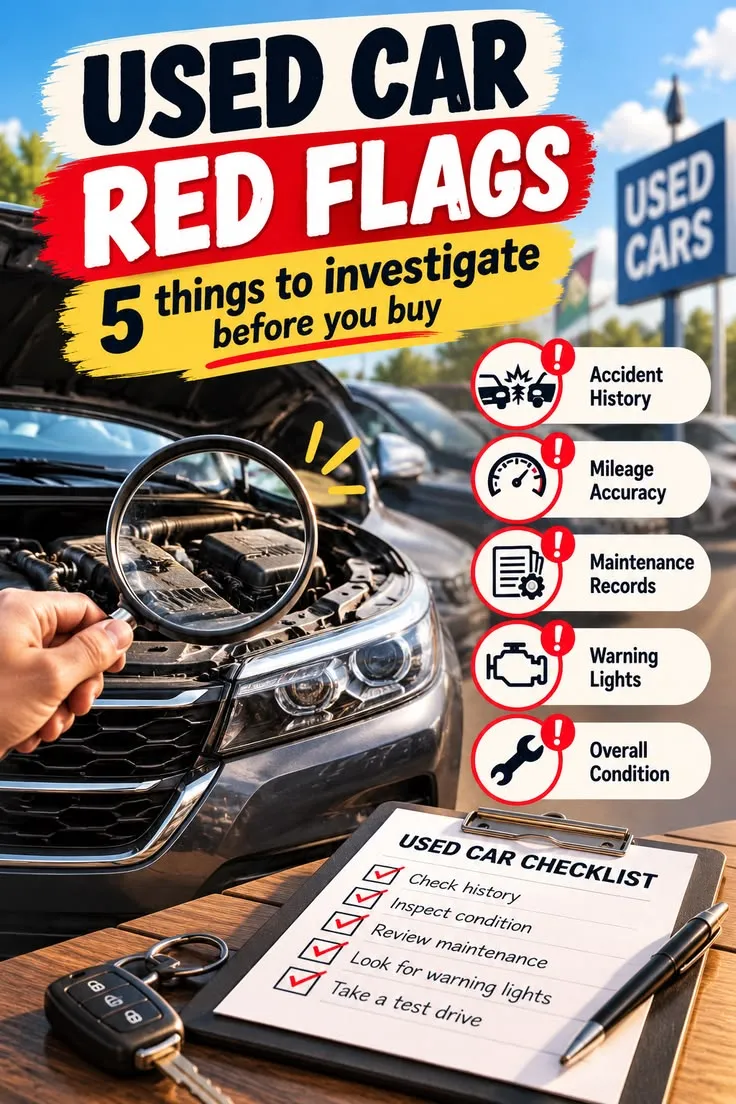
Interior wear should roughly match the stated mileage. Heavy wear on the driver’s seat, steering wheel, or pedals of a low-mileage car raises questions. Check for musty odors, water stains under carpets, or dampness that may indicate past flooding or leaks. Test every switch, window, lock, seat adjustment, climate control system, and infotainment feature. Confirm that all dashboard warning lights illuminate briefly at startup and then extinguish. Persistent warning lights require further investigation.
Conduct a Thorough Test Drive
A meaningful test drive lasts at least 20 to 30 minutes and includes varied conditions: city streets, highway speeds, rough surfaces, and firm braking. Keep the radio off to hear mechanical noises. Note how the engine starts and idles, how the transmission shifts (smooth engagement without hesitation or slipping), and whether the steering tracks straight and returns to center. Brakes should feel firm and stop the car without pulling to one side or making unusual sounds. Listen for clunks, rattles, or vibrations, especially over bumps or at higher speeds. After the drive, recheck for new fluid leaks.
Obtain a Professional Pre-Purchase Inspection
Even after a careful personal inspection, arrange an independent mechanic’s evaluation. A trained technician with diagnostic equipment can uncover issues not visible to an average buyer, such as internal engine wear, transmission problems, or suspension wear. Many buyers consider this step essential before finalizing a purchase. A written report provides clear information for negotiation or the decision to walk away.
Finalize Paperwork and Decision
Review the federal Buyers Guide if purchasing from a dealer. Understand any remaining warranty coverage. Confirm all agreed terms in writing. If the inspection reveals significant problems, negotiate repairs or a lower price, or continue searching. There is always another vehicle available.
A methodical approach—history research, detailed visual and mechanical checks, a proper test drive, and professional verification—greatly increases the likelihood of selecting a dependable used car. Taking time at each stage protects both safety and long-term ownership costs.
Read more- marathimeanings.com